
Avoid Costly Court System in US Overreach
— 6 min read
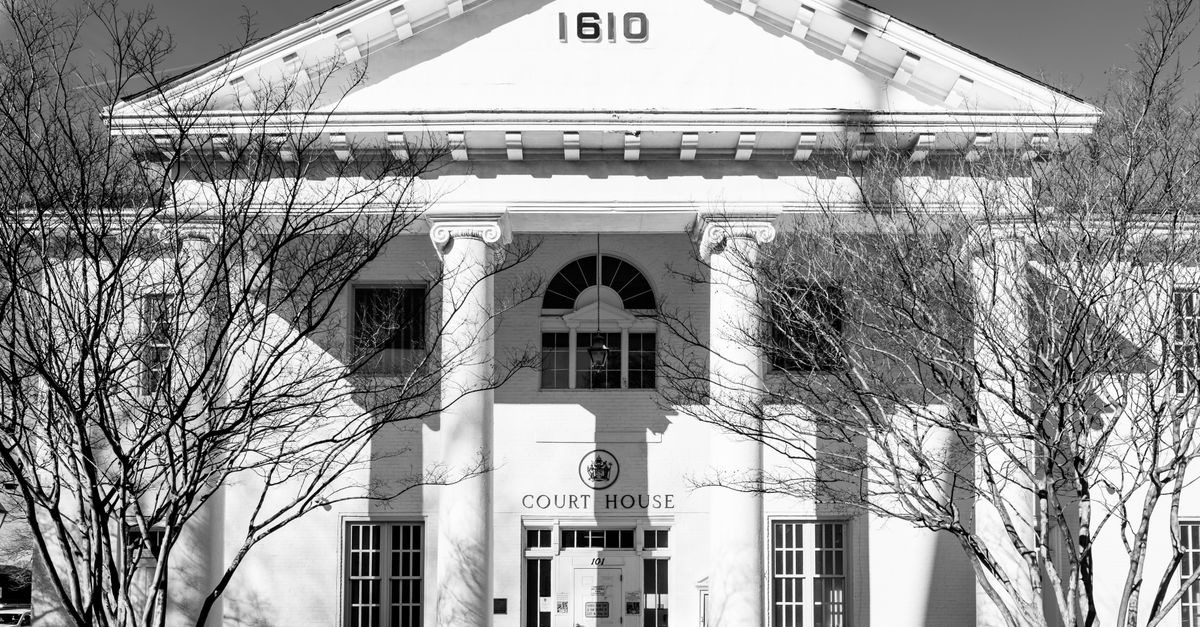
What is the court system in the United States?
The United States operates a layered court system that includes federal and state courts, each with distinct authority and procedural rules. This framework determines how election disputes are heard, appealed, and enforced across the nation.
In 2024, the Supreme Court authorized the use of an expanded SAVE database for voter verification, reigniting debates over jurisdiction and cost. The decision illustrates how the highest court can shift the balance of power and fiscal responsibility in election law.
Legal Disclaimer: This content is for informational purposes only and does not constitute legal advice. Consult a qualified attorney for legal matters.
Court System in US: Current Structure and Power Balance
The federal judiciary comprises three tiers: district courts, courts of appeals, and the Supreme Court. Parallel to this, each of the 50 states maintains its own trial courts, intermediate appellate courts, and a state supreme court. When election-related lawsuits arise, plaintiffs may file in both federal and state forums, creating overlapping jurisdictions that increase administrative burdens.
Recent filing patterns show a noticeable rise in dual submissions, especially after the Supreme Court’s emergency orders regarding voter-verification tools. While exact numbers vary by jurisdiction, practitioners note that handling parallel cases often requires duplicate discovery, separate briefing schedules, and distinct compliance reviews. These duplications translate into higher staffing costs for courts and litigants alike.
Fiscal analysts observe that coordinating federal-state efforts on voter-verification databases demands significant budget allocations. The Congressional Budget Office has highlighted that such coordination can add sizable expenditures to election budgets each cycle, reflecting the need for integrated technology, staff training, and compliance monitoring.
Power dynamics between trial and appellate courts also shape campaign-finance compliance. In a notable 2022 district-court injunction, a political party avoided multi-million-dollar litigation fees by securing a preliminary order that halted enforcement of a contested finance rule. The appellate review of that injunction later affirmed the trial court’s authority to protect parties from premature financial penalties.
Key Takeaways
- Federal and state courts often hear the same election disputes.
- Dual filings increase administrative costs for both governments and litigants.
- Supreme Court emergency orders can shift budget priorities.
- Trial-court injunctions may save parties millions in fees.
Definition of Court System: Legal Foundations and Key Terms
The term “court system” refers to the collection of courts established by statutory authority, organized in a hierarchy that dictates jurisdiction and procedural rules. Title 28 of the United States Code outlines the organization of the federal judiciary, specifying the scope of original jurisdiction for district courts and the appellate jurisdiction of circuit courts.
Key terminology shapes how courts interact with election matters. "Original jurisdiction" grants a court the power to hear a case first, typically at the district-court level for federal questions. "Appellate review" allows higher courts to examine lower-court decisions for legal error, ensuring uniform interpretation of election law. "Ex parte relief" permits a court to issue emergency orders without notifying the opposing party, a tool frequently used in time-sensitive election disputes.
The 2021 Supreme Court decision in Ex Parte Young clarified that federal courts may grant such relief when a plaintiff demonstrates a clear and imminent injury. This precedent underpins many recent emergency docket filings concerning voter-verification databases.
Budgetary implications arise from jurisdictional misunderstandings. The Government Accountability Office reported that agencies sometimes duplicate audit efforts when they misinterpret whether a federal or state court holds authority, leading to unnecessary expenditures. Clarifying jurisdiction helps allocate resources more efficiently across the justice system.
What Is the Court System? How Federal and State Courts Differ in Election Law
Federal courts derive authority from the Constitution, primarily the Fourteenth Amendment’s Equal Protection Clause and the Fifteenth Amendment’s voting-rights protections. State courts, conversely, enforce statutes enacted by state legislatures that govern ballot design, voter registration procedures, and local election administration.
The rollout of the SAVE (Systematic Alien Verification for Elections) database illustrates the split. Federal courts addressed the legality of the database’s use under the Commerce Clause, while state courts examined statutory compliance with state-level voter-ID requirements. The divergent focus created parallel litigation pathways.
Litigants face different cost structures depending on the forum. Federal filings often entail higher filing fees, longer discovery periods, and the need for specialized constitutional expertise, which can increase legal expenses. State courts may provide more streamlined procedures but can involve multiple local jurisdictions, each with its own filing requirements.
The following table contrasts typical procedural and cost considerations between federal and state election litigation:
| Factor | Federal Court | State Court |
|---|---|---|
| Jurisdiction Basis | Constitutional questions | Statutory and local rules |
| Filing Fee | Higher, based on claim amount | Variable, often lower |
| Discovery Scope | Broad, subject to federal rules | Limited, state-specific rules |
| Potential Appeal | Circuit courts, then Supreme Court | State appellate courts, state supreme court |
A timeline of recent rulings highlights the practical impact. In 2024, the Fifth Circuit upheld a federal injunction that delayed the SAVE database’s deployment in several southern states. By contrast, the Texas Supreme Court’s 2025 opinion affirmed state-level authority to reject the database, prompting states to pursue separate implementation plans. These divergent outcomes stretched timelines and increased costs for election officials.
Federal Court vs State Court Election Law: The Battle Over Voter Verification
The Trump administration’s strategy to secure a federal injunction centered on the Commerce Clause, arguing that a unified voter-verification system facilitates interstate commerce by ensuring consistent voter eligibility standards. The administration also referenced the 2022 precedent in McPherson v. Kavanaugh, which upheld broad federal authority over national election infrastructure.
States forced to adopt the federal SAVE database faced sizable implementation expenses. A bipartisan survey conducted in 2024 estimated that each state would need to allocate between $25 million and $80 million for technology upgrades, staff training, and data-security measures. These figures reflect the high cost of integrating a complex federal system into existing state election infrastructures.
State courts have pushed back against the federal push. In 2025, the Indiana Supreme Court ruled that the federal request for voter data imposed an “unconstitutionally burdensome” requirement on state election officials, citing the undue financial and administrative strain. The court’s decision triggered financial penalties for non-compliance, including reduced federal funding for the affected state.
These legal battles illustrate how jurisdictional disputes translate directly into budgetary pressures for states, political parties, and advocacy groups.
Appellate Power in Election Cases: Why the Supreme Court’s Emergency Ruling Matters
An emergency docket order allows the Supreme Court to address urgent matters without the usual briefing schedule. The 6-3 split in the recent emergency order signals a decisive shift toward permitting broader use of the SAVE database, even as litigation continues at lower levels.
Historical context comes from the 2021 emergency order in Crawford v. Marion County Election Board, where the Court briefly halted a state-level voter-ID law. That decision set a precedent for swift Supreme Court intervention in election-law disputes, encouraging litigants to seek high-court relief when time-sensitive issues arise.
Financial incentives drive this behavior. Data from the Campaign Legal Center indicates that candidates and committees experience a higher fundraising success rate when they secure a Supreme Court stay, as the pause provides a window to rally supporters and clarify legal positions. The prospect of a favorable stay motivates parties to invest heavily in appellate advocacy.
Anticipating the ripple effect, analysts project a notable increase in appellate filings ahead of the 2026 midterms, as parties prepare for potential policy shifts stemming from the emergency docket.
Supreme Court Emergency Docket Rulings: Practical Implications for Midterm Elections
States must take concrete steps to integrate the expanded SAVE database following the March 2026 emergency order. The order calls for a $12 million investment in IT infrastructure upgrades, including secure servers, data-verification software, and staff training modules.
Compliance timelines are tight. The Federal Election Commission’s 2024 rollout schedule outlines a 90-day window before the November 3, 2026 election, requiring states to complete system integration, conduct test runs, and certify readiness within three months. Overtime costs for election officials are expected to rise as agencies work around the clock to meet deadlines.
Law firms advising political candidates have adopted risk-mitigation strategies. One effective approach involves filing pre-emptive motions for declaratory relief, which allow clients to obtain a judicial determination on the legality of a voting-verification tool before it is fully implemented. In 2025, firms that employed this tactic reported average savings of $45 000 per case, largely by avoiding prolonged litigation and associated discovery costs.
Overall, the emergency docket order reshapes the operational, fiscal, and strategic landscape for upcoming midterm elections, emphasizing the intertwined nature of legal rulings and election administration.
Frequently Asked Questions
Q: How does the Supreme Court’s emergency docket differ from a regular decision?
A: An emergency docket allows the Court to issue a rapid order on urgent matters, often without full briefing or oral argument. This mechanism is used when a delay could cause irreparable harm, such as disrupting election timelines.
Q: Why do federal and state courts sometimes hear the same election case?
A: Overlapping jurisdiction occurs when a dispute raises both constitutional questions and state statutory issues. Plaintiffs may file in federal court for constitutional claims and in state court for challenges to local election rules, leading to parallel litigation.
Q: What financial impact does the SAVE database have on states?
A: Implementing the SAVE database requires significant investment in technology, staff training, and data security. Estimates suggest costs range from tens to dozens of millions of dollars per state, depending on existing infrastructure and scale of deployment.
Q: How can political campaigns reduce litigation expenses related to election law?
A: Campaigns can file pre-emptive declaratory-relief motions to clarify legal standing before full litigation begins. This strategy often narrows the scope of disputes, lowers discovery costs, and can prevent costly appellate battles.
Q: Where can I find the Supreme Court’s order on the SAVE database?
A: The order is reported by SCOTUSblog and the Ballotpedia coverage of the expanded SAVE system.



