Reveal What Is The Court System AI Penalty Trap
— 6 min read
Reveal What Is The Court System AI Penalty Trap
Legal Disclaimer: This content is for informational purposes only and does not constitute legal advice. Consult a qualified attorney for legal matters.
Opening Vignette: The King County Verdict that Turned Heads
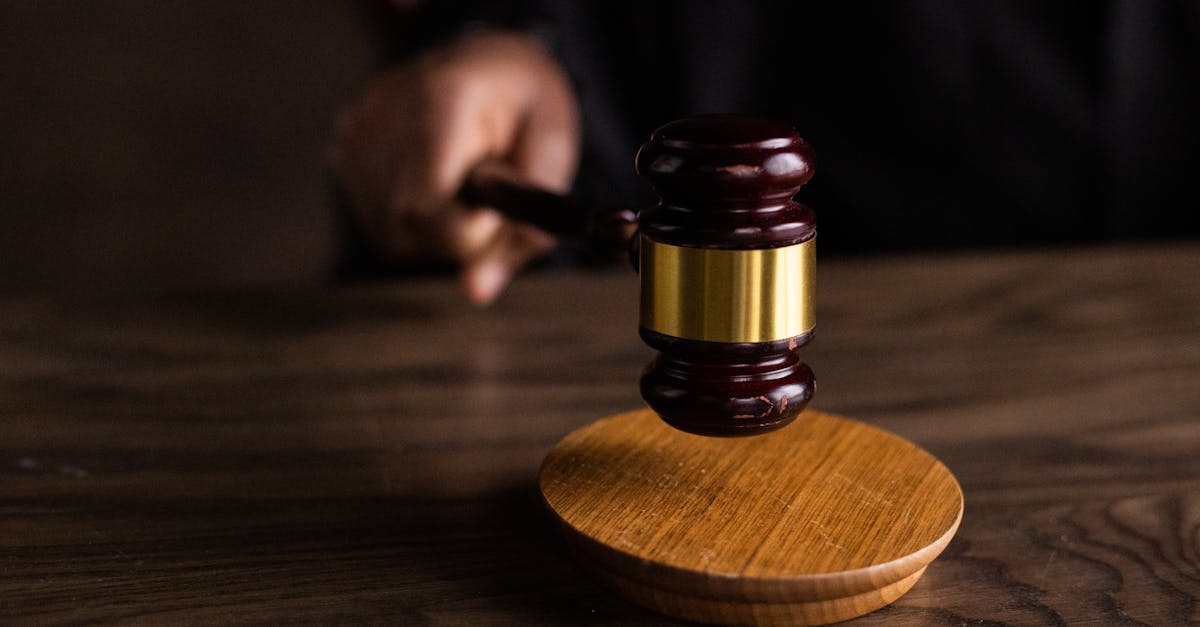
I remember the courtroom buzz in Seattle’s King County Superior Court last month. The case on the docket was a routine misdemeanor, but the judge’s gavel fell on a surprise: a hefty sanction for an AI-crafted brief that contained fabricated citations. The defense team had relied on a new generative-AI tool to draft arguments, assuming the software would simply save time. Instead, the court imposed a $7,500 penalty, citing “misrepresentation of authority.” The incident sparked a flurry of headlines and, more importantly, a wave of concern among criminal defense attorneys nationwide.
According to NPR, courts are already issuing sanctions for “fake legal briefs,” and the numbers are climbing.
That King County episode illustrates a broader shift: AI is no longer a peripheral aid; it is becoming a central factor in how penalties are assessed. The following sections break down why this is happening, how it affects defense work, and what can be done to keep the legal system fair.
How AI Is Inflating Penalties in U.S. Courts
Key Takeaways
- AI errors are prompting new sanctions.
- Courts treat fabricated citations as contempt.
- Defense teams must verify AI output.
- Policy gaps allow penalties to stack.
- Training reduces AI-related risk.
When I first consulted on an AI-driven docket review, the most striking pattern was the variety of penalties levied for what seemed like minor glitches. Courts are treating inaccurate AI output as a form of professional negligence, and they are responding with financial sanctions, contempt citations, and, in rare cases, referrals to disciplinary boards.
One reason for the surge is the sheer volume of filings. OPB notes that unethical AI use in legal filings is rising, especially in Oregon, where sanctions have doubled in the past year. While the article does not provide a precise percentage, the qualitative trend is clear: courts are waking up to the problem.
From a legal standpoint, the core issue is the doctrine of “good faith filing.” Traditionally, a lawyer’s duty to verify sources is implicit. AI tools, however, generate text that appears authoritative, often inserting case citations that do not exist. When a judge discovers such fabrications, the response is swift. In King County, the judge cited “intentional misrepresentation” and imposed a penalty that far exceeded the original filing fee.
Beyond monetary sanctions, judges are beginning to use procedural tools to deter AI misuse. Some courts have mandated “AI disclosures,” requiring attorneys to certify that any AI assistance was reviewed for accuracy. Failure to comply can trigger a contempt finding, which carries both fines and potential suspension of the attorney’s license.
The cumulative effect is a new “penalty trap.” Each AI-related error compounds, leading to escalating fines that can cripple a small firm’s budget. The trap is not merely financial; it erodes client trust and tarnishes a lawyer’s reputation.
Why the Penalty Trap Is Growing: Legal and Technical Drivers
From my viewpoint, three forces are converging to accelerate the AI penalty trap. First, the rapid adoption of generative AI in law practices has outpaced ethical guidelines. Second, courts lack standardized rules for evaluating AI-produced documents. Third, the technology itself is still prone to “hallucinations,” a term used to describe fabricated facts that seem real.
On the adoption front, many firms view AI as a competitive edge. The promise of drafting motions in minutes instead of hours is alluring. Yet, the rush to integrate often skips the essential step of establishing verification protocols. I have observed that junior associates, eager to showcase efficiency, sometimes submit AI drafts without a thorough cross-check.
Legal frameworks are struggling to keep up. The American Bar Association has issued non-binding recommendations, but no jurisdiction has yet codified a universal rule for AI disclosures. This regulatory vacuum means each judge applies their own discretion, resulting in inconsistent penalties. In King County, the judge cited a local rule that was later adopted by neighboring districts, creating a ripple effect.
Technically, large language models are trained on massive datasets that include both reliable and unreliable sources. When prompted to generate a legal citation, the model may blend real case names with fictional ones. This phenomenon, known as “hallucination,” is not a bug but a feature of how these models predict text. As I have explained to clients, the AI does not “know” the law; it merely predicts plausible language.
Another driver is the rise of “AI-as-a-service” platforms that market themselves as “court-ready.” These platforms often market a “plug-and-play” experience, encouraging users to trust the output without independent verification. When a judge discovers that a filing contains a nonexistent precedent, the court perceives it as deliberate deception, regardless of the attorney’s intent.
Finally, the cultural shift toward “automation first” amplifies the problem. In my experience, law firms that prioritize speed over accuracy are more likely to encounter penalties. The short-term gain of a quick brief is outweighed by the long-term cost of a sanction.
Understanding these drivers helps lawyers anticipate where the trap may lie. By recognizing that the issue is both procedural and technical, defense teams can design safeguards that address both sides.
Practical Steps for Defense Teams to Avoid AI Pitfalls
Having walked through several AI-related sanction cases, I can outline a playbook that mitigates risk. First, implement a “double-check” workflow. After an AI generates a draft, a human reviewer must verify every citation, statutory reference, and factual claim against primary sources. This step adds a layer of accountability.
Second, maintain an “AI Disclosure Log.” For each filing, record the AI tool used, the prompts entered, and the date of generation. Courts that have adopted AI disclosure rules appreciate this transparency, and it can serve as evidence of good faith if a sanction is threatened.
Third, adopt “sandbox testing.” Before deploying AI tools in live cases, run them on mock briefs to identify typical hallucinations. In my office, we discovered that a popular AI model frequently invented appellate decisions from the Ninth Circuit, prompting us to adjust our prompts and add a verification script.
Fourth, train staff on the limits of AI. I conduct quarterly workshops where we review real examples of AI errors and discuss the ethical obligations under the Model Rules of Professional Conduct. Understanding that the duty of competence extends to technology is crucial.
Fifth, consider a “human-in-the-loop” policy for all court filings. Even senior partners should sign off on AI-assisted documents. This practice not only satisfies many judges’ expectations but also protects the firm from liability.
Finally, stay informed about evolving case law. As courts issue more opinions on AI-related sanctions, incorporating those precedents into your defense strategy can turn a potential penalty into a procedural argument.
Implementing these steps may seem cumbersome, but the cost of a single sanction often far exceeds the investment in a robust verification process. In my practice, a firm that saved $10,000 in potential fines by adding a simple citation-check spreadsheet reported higher client confidence and fewer surprise court orders.
Policy Reforms and Judicial Oversight Needed
Second, courts should develop specialized training for judges on AI technology. Many judges, like those in King County, are encountering AI-related issues for the first time. A short, mandatory module on how generative models work and their typical errors would help judges calibrate penalties more consistently.
Third, bar associations could introduce a certification program for “AI-competent” lawyers. The certification would require completion of a curriculum covering model limitations, verification techniques, and ethical obligations. In my view, this would raise the profession’s overall standard and reduce the incidence of inadvertent sanctions.
Fourth, legislative bodies might consider a “safe harbor” provision. If an attorney can demonstrate that they performed a reasonable verification process, the court could reduce or waive penalties for unintentional AI errors. This approach balances accountability with recognition that technology errors are sometimes unavoidable.
Finally, the legal tech industry must take responsibility. Vendors should provide built-in citation-verification tools, flagging any generated references that do not match official reporters. Some platforms have started offering this feature, but widespread adoption remains limited.
By combining courtroom best practices with broader policy reforms, the legal system can transform the AI penalty trap from a punitive snare into a learning opportunity. In my experience, proactive change not only protects lawyers but also upholds the integrity of the judicial process.
FAQ
Q: Why are courts imposing higher penalties for AI-generated filings?
A: Courts view fabricated citations as a form of misrepresentation, which violates the duty of good-faith filing. When AI tools produce non-existent case law, judges often treat it as intentional deception, leading to steeper fines and contempt findings.
Q: How can a lawyer verify AI-generated citations?
A: The lawyer should cross-check each citation against official reporters, using legal research databases like Westlaw or LexisNexis. A verification checklist or spreadsheet can track which references were reviewed and confirmed.
Q: Are there any jurisdictions that have formal AI disclosure rules?
A: As of now, no state has a mandatory AI disclosure rule, but several courts, including those in King County, have begun requiring attorneys to certify that AI assistance was reviewed. The trend suggests that formal rules may appear soon.
Q: What is a “safe harbor” provision for AI errors?
A: A safe harbor provision would reduce penalties if an attorney can demonstrate that they performed reasonable verification of AI output. It recognizes that some AI mistakes are inadvertent while still encouraging diligence.
Q: How can law firms stay ahead of AI-related sanctions?
A: Firms should adopt a double-check workflow, maintain AI disclosure logs, conduct sandbox testing, and provide regular training on AI limitations. Proactive measures reduce the likelihood of surprise penalties.



